


Lefkimmi is one of the largest, oldest, and most historic villages in southern Corfu. It is located approximately 43 kilometers from the historic center of the island and is home to over 4,000 residents, making it the second largest population cluster on the island. Lefkimmi has maintained an important role in both the social and tourist life of Corfu, a status that stems from its rich history, which dates back centuries.
The area appears to have been developed as early as ancient Greek times, thanks to its fertile plain, and it is first mentioned during the recording of the Battle of Sybota, which marked the escalation of the hostilities between the Corfiots and the Corinthians. In later years, specifically during the Venetian rule, the island of Corfu was divided into four large administrative sections, known as “Vailika.” The area of Lefkimmi was then referred to as Alefkhimon, from which the alternative local name “Alefki” for the region is derived and is still used today.
Modern Lefkimmi consists of several small settlements that, over time, developed and merged into a unified community that continues to evolve to this day. The history of the area and the village itself is strongly connected to agriculture. The locals managed to create remarkable examples of Corfiot architecture by building impressive homes, mansions, and churches. They also continue to preserve traditions, customs, and cultural practices that are unique to Corfu, with the help of cultural associations. Lefkimmi is home to two brass bands, which teach the art of music to both young and old.
Of particular interest are the significant churches of the village. One of these is dedicated to Saint Arsenius, the patron saint of the village and the Bishop of Corfu. The church is notably different from the well-known churches on the island as it is built in a different architectural style. Similarly, the church of the Holy Unmercenaries is built in a similar style, with its two prominent towers standing out on the façade of the building.
Near the center of the village, specifically in the Melikia area, is one of the few rivers on Corfu. The river of Lefkimmi, as it is known, is navigable in a small part of its course and serves the needs of the locals. The villagers use the river as a means to quickly reach the sea. The river has been carefully managed and respected by the locals, and along its banks, there are cafés and restaurants inviting both locals and tourists to relax in the beautiful surroundings and enjoy a drink or a traditional dish from the island.
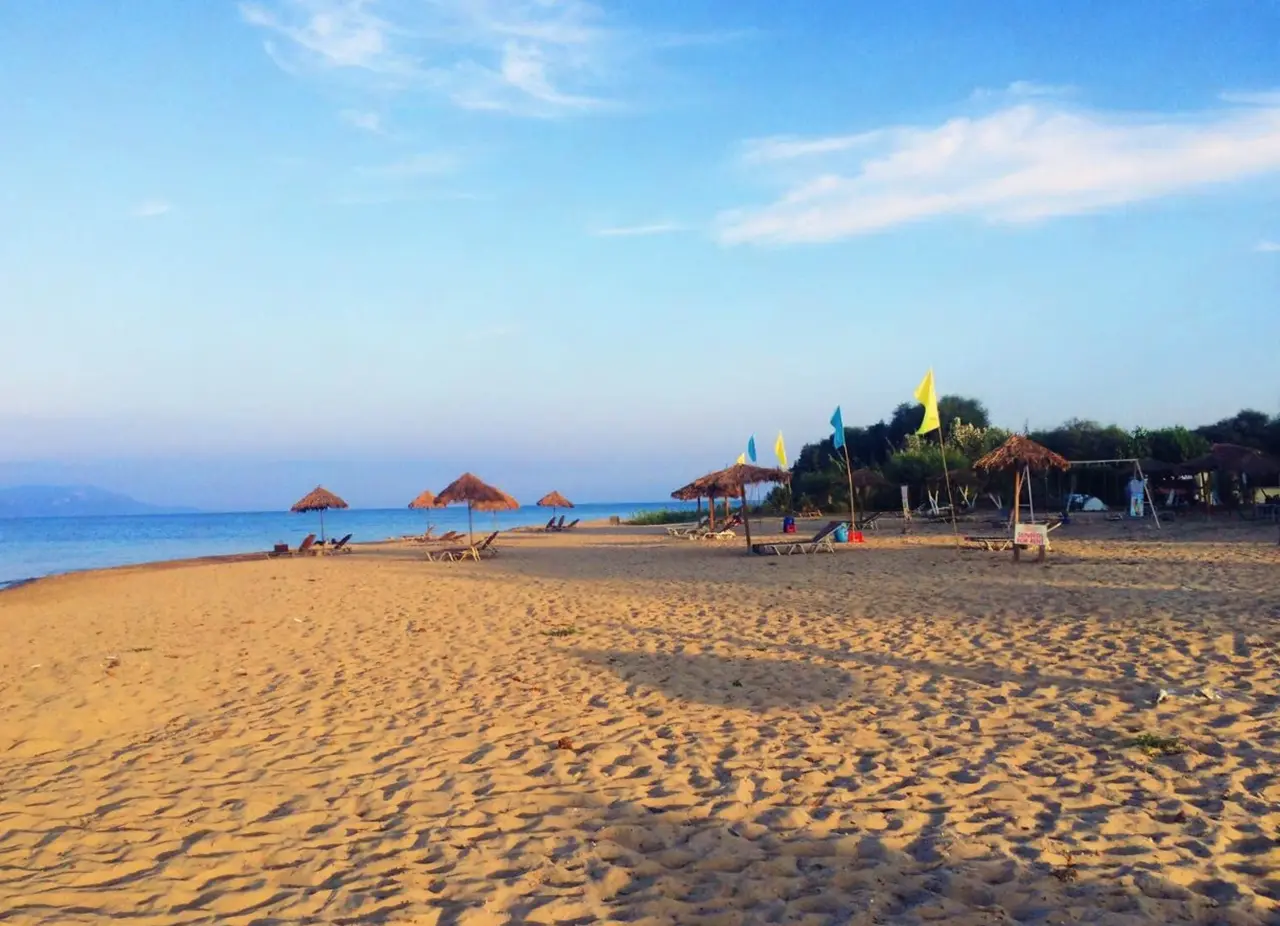
Because Lefkimmi is located somewhat far from the sea, it is not as well-known to tourists who generally prefer to relax by the coast and experience the magic of Corfu’s natural beauty and countryside. However, since the late 20th century, with the rise of tourism, many of the island’s residents sought to venture into the tourism industry. As a result, the area of Kavos, a location of unique natural beauty, began to host the first tourists in southern Corfu. The beach with its golden sand and shallow waters became a major attraction, allowing visitors of all ages to enjoy swimming and have fun in the crystal-clear waters of the Ionian Sea. Over time, the first restaurants, cafés, and tavernas were established, and they continue to offer visitors the unique flavors of Corfiot cuisine.
“Scenic beaches, lively nightlife, vibrant bars, and traditional Greek charm.”
Kavos also offers a variety of apartments and hotel units to cater to all needs. Over the years, the area gained a specific reputation, attracting a predominantly young tourist crowd. Its remote location, along with its unique character, has transformed Kavos into a destination comparable to Malia in Crete or Laganas in Zakynthos. The area is especially popular with British tourists who flock to it throughout the summer months.
In recent years, many have sought new trends in the tourism industry, choosing to stray from traditional approaches. The use of caravans as a means of transport and accommodation has become an ideal option for those who love exploration and discovery. A caravan allows visitors to engage directly with nature and experience the true beauty of Corfu’s countryside. It also provides a great solution for those who wish to visit beaches, villages, and places at their own pace and in the comfort of their own “home.”
One of the most beautiful villages near Lefkimmi is Argyrades. This particular settlement stands out for its traditional architecture and its unique stone-paved alleys. In Argyrades, visitors will also find the oldest olive tree on the island. This tree, belonging to the Lianolia variety, is estimated to be about 2,700 years old. Remarkably, this olive tree continues to be productive to this day. Close to Argyrades, there is another picturesque village with a long history and culture that stretches back centuries. This village is Chlomos, home to about 150 residents and built at an altitude of 300 meters. Chlomos is especially well known for its beautiful mansions, some of which were built before the 17th century. The village also offers a breathtaking view from its highest point, where one can see the entire southern part of Corfu.
Both Lefkimmi and Kavos are unique examples of Corfu’s rural landscape. Lefkimmi, with its distinct characteristics and vibrant temperament, charms visitors and offers them a journey through time that is hard to find elsewhere. Do not miss the opportunity to visit its lovely small neighborhoods and the serene river. On the other hand, Kavos, as a large tourist resort, represents the modern approach to the tourism industry, offering numerous opportunities for entertainment and nightlife that can keep visitors entertained until the early hours.
If you choose to visit this special part of southern Corfu, you should definitely do so with the help of a caravan, a means of transport that can truly make your holiday unique and create experiences that will stay with you for a lifetime.